Campus Life
Inclusion Is Not a Favour: The Call for Equal Access and Opportunities at UEW
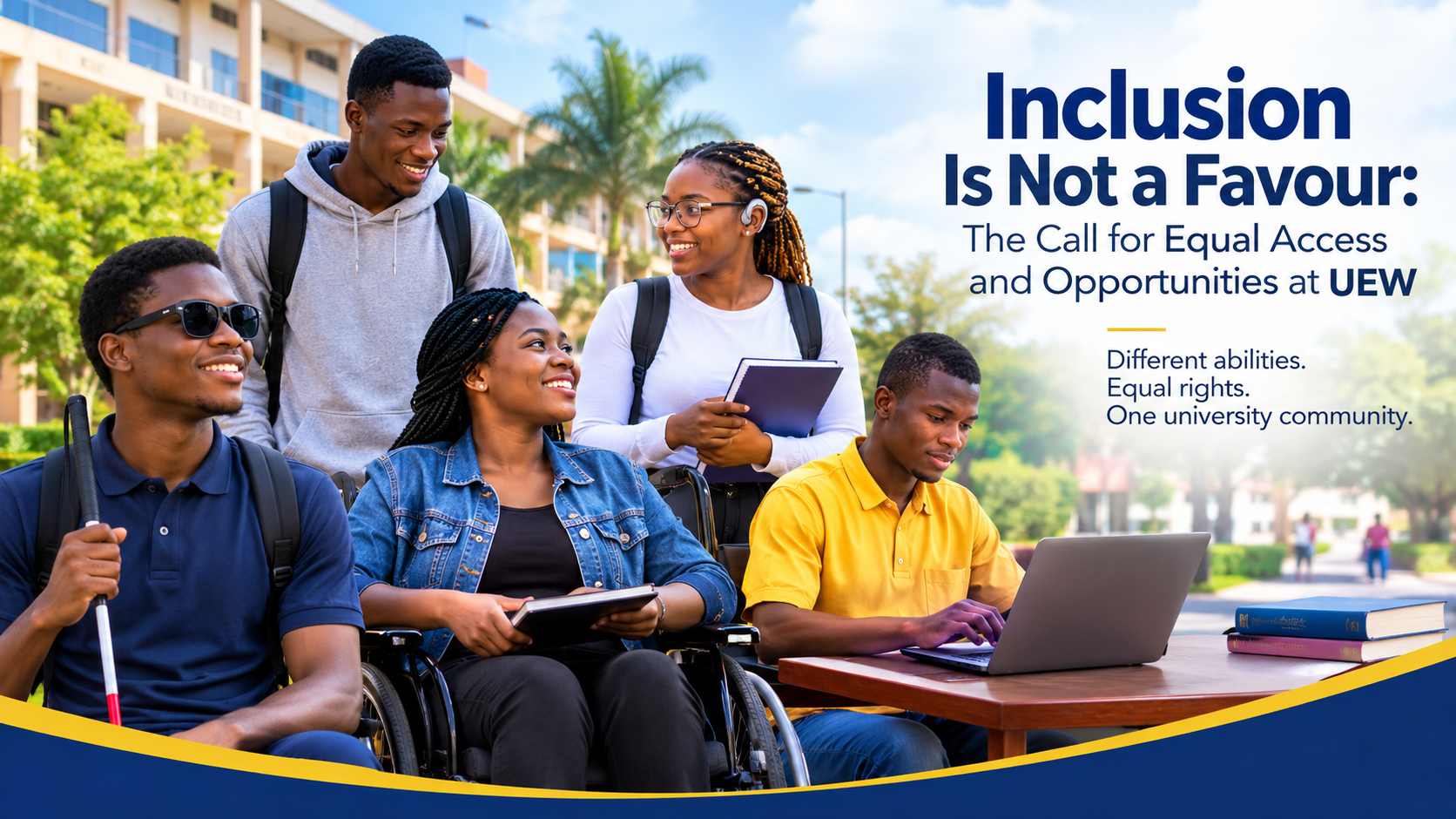
At the University of Education, Winneba, every student deserves the opportunity to learn, participate and succeed. Every student has dreams to pursue, knowledge to acquire and a future to build. However, for students with special needs, the journey through university can sometimes involve barriers that make access to education and participation in campus life more difficult than they should be.
For some students, attending lectures may mean dealing with inaccessible classrooms or learning materials that are not available in suitable formats. For others, navigating campus facilities, accessing digital platforms or participating in university activities may present additional challenges. These experiences remind us that the right to education must go beyond admission into a university. It must include the practical support, accessible environment and equal opportunities that enable every student to learn and thrive.
Inclusion is not a favour granted to students with special needs. It is a matter of equal rights, dignity and fairness. Students with visual impairments, hearing impairments, physical disabilities, intellectual disabilities, learning difficulties and other special educational needs deserve to be recognised as valued members of the university community. Their needs may differ but their right to quality education, respect and meaningful participation remains the same.
The responsibility for creating an inclusive university does not rest on students with special needs alone. University management, lecturers, administrative staff, fellow students and the wider university community all have important roles to play. Accessible teaching materials, appropriate assistive technology, inclusive teaching practices and barrier-free facilities can make a significant difference in the academic and social experiences of students with special needs.
Lecturers can contribute to inclusion by providing learning materials in accessible formats and adopting teaching methods that recognise the different ways students learn. Administrative offices can improve access to information and services by ensuring that their processes are accessible to all. Fellow students can also help build a supportive environment by promoting respect, challenging negative stereotypes and treating students with special needs as equal colleagues rather than objects of sympathy.
Technology is another important part of this conversation. Screen readers, magnification software, captioning tools and other assistive technologies can support students in accessing information and completing academic tasks. However, these tools are most effective when university digital platforms, learning management systems and electronic resources are designed with accessibility in mind. Technology should open doors to learning rather than create additional barriers for the students who depend on it.
Beyond academic work, students with special needs deserve equal opportunities to participate in student leadership, sports, social activities, research, internships and other aspects of university life. University education is not limited to lectures and examinations. It also involves developing confidence, building relationships, discovering talents and preparing for meaningful contributions to society. Excluding students from these experiences because of inaccessible environments or inadequate support limits their opportunities to grow and contribute.
It is also important to recognise that students with special needs are not defined by their disabilities. They are individuals with talents, ambitions, ideas and abilities that can enrich the university community. Given appropriate support and equal opportunities, they can excel academically, take up leadership responsibilities and contribute meaningfully to national development. Their experiences can also help the university identify existing barriers and develop more inclusive approaches to teaching, learning and student engagement.
The Association of Students with Special Needs at the University of Education, Winneba remains an important voice in promoting the rights, welfare and inclusion of students with special needs. Through advocacy, awareness creation and engagement with relevant stakeholders, the association can help bring attention to the challenges students face while encouraging practical solutions that benefit the entire university community.
Creating an inclusive university requires more than occasional awareness campaigns or statements of support. It requires consistent action, meaningful consultation with students with special needs and a willingness to address barriers wherever they exist. Their voices must be heard in decisions that affect their education and welfare. Policies and services intended to support them should reflect their actual experiences and needs.
As a university committed to education and human development, the University of Education, Winneba has an opportunity to continue strengthening a culture in which accessibility and inclusion are central to student life. Every improvement in accessible infrastructure, learning resources, digital services and institutional support brings the university closer to an environment where all students can participate on equal terms.
Ultimately, inclusion is not about giving students with special needs an advantage over others. It is about ensuring that disability or other support needs do not prevent anyone from accessing the opportunities that university education should provide. Fairness does not always mean providing everyone with exactly the same resources. It means recognising different needs and providing appropriate support so that everyone has a genuine opportunity to succeed.
The call is therefore clear. Inclusion must move beyond words and become a daily practice reflected in the university's facilities, teaching methods, policies and relationships. Every student deserves to be seen, heard, respected and supported.
Inclusion is not a favour. It is a shared responsibility and a commitment to equal rights, equal opportunities and a university community where every student belongs.
More News
 Campus Life
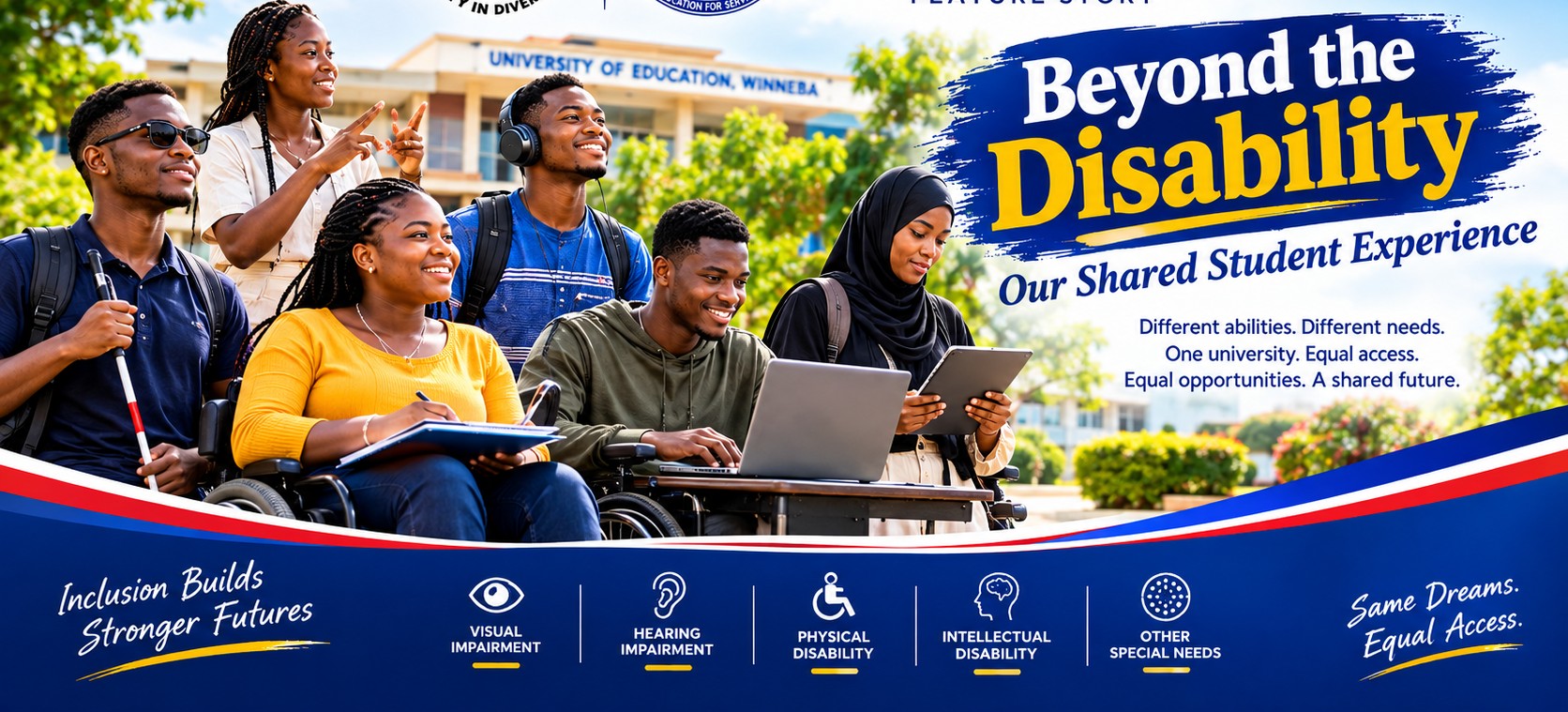
Beyond the Disability: The Untold Stories of Students with Special Needs at the University of Education Winneba
A human interest feature exploring the experiences challenges achievements and aspirations of students with special needs at the University of Education Winneba.
Read more →